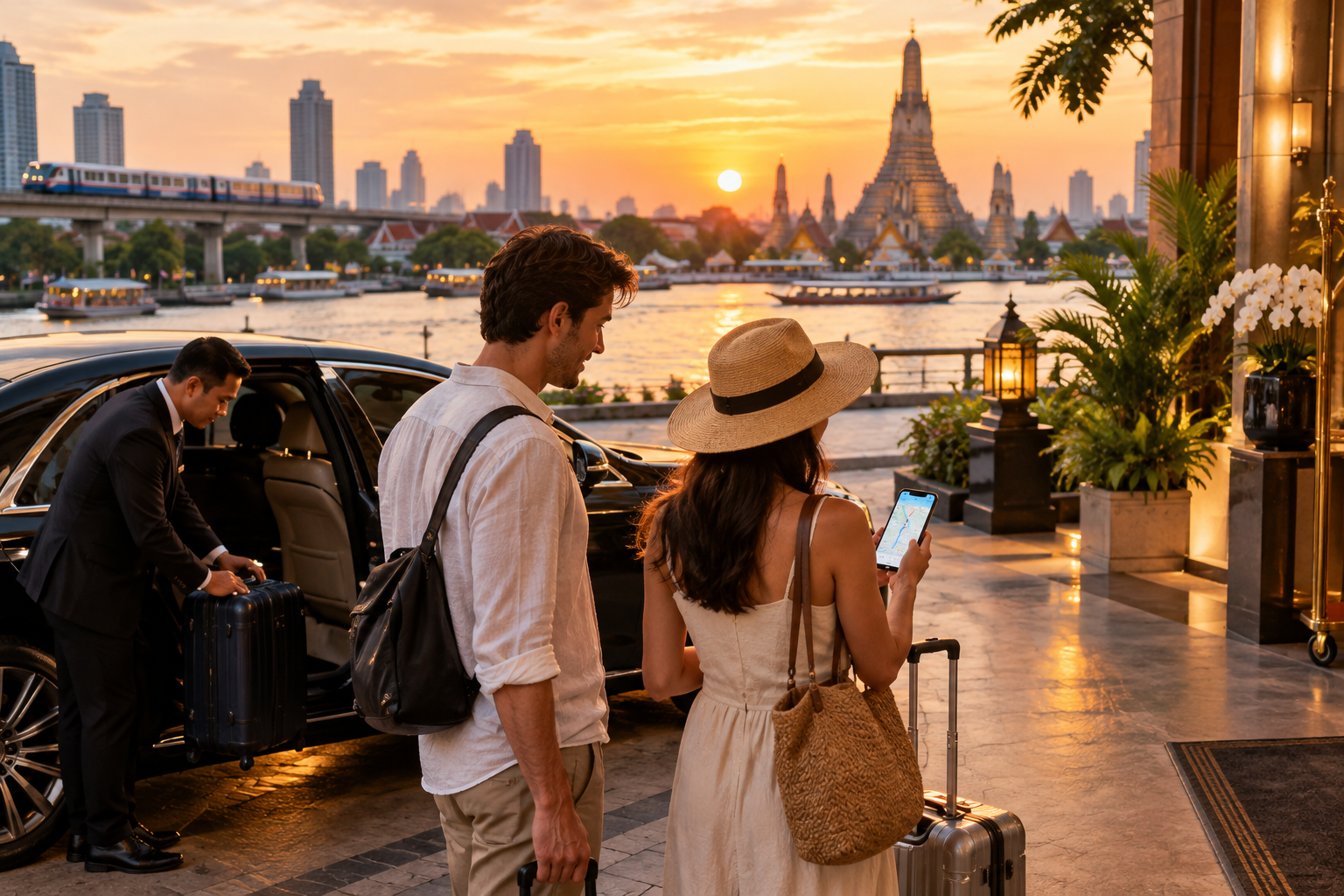

Bangkok rewards travelers who plan just enough to move efficiently while leaving room for the city to surprise them. With only three days, the difference between a rushed trip and a smooth one often comes down to one practical detail: how you handle airport transfers from the moment you land to the moment you leave.
This guide maps out a smart, realistic three day stay in Bangkok with a strong focus on arrival logistics, neighborhood strategy, daily routing, and the best departure plan. You will see where to stay, what to do each day, how to avoid common transfer mistakes, and when public transport beats taxis. If you want a Bangkok itinerary that feels organized without being rigid, this is the framework to follow.
Choose the Right Base Before You Even Land
A successful Bangkok trip starts with picking a neighborhood that matches your airport, your sightseeing priorities, and your comfort level with city transport. Bangkok is large, traffic is unpredictable, and travel times can vary dramatically depending on the hour. For a three day visit, your hotel location matters almost as much as your daily plan.Best areas for first time visitors
Sukhumvit is one of the easiest choices for many travelers. It has broad hotel options, plenty of restaurants, and strong access to the BTS Skytrain. Areas around Asok, Nana, and Phrom Phong are convenient if you want modern shopping, nightlife, and easy transit. Siam is ideal if you want a central base connected to malls, food courts, and train lines. It is practical, busy, and efficient for moving around. Riverside works well if you want a more atmospheric stay with quick boat access to historic sights. It can feel more scenic and relaxing, especially after a long flight, though hotel prices can be higher. Silom and Sathorn are strong choices for travelers who want a mix of business district convenience, dining, and access to both the BTS and MRT. Old Town near Rattanakosin is best if temples, heritage streets, and early morning sightseeing are your top priority. The tradeoff is that rail access is less seamless than in Sukhumvit or Siam.How your airport affects your hotel strategy
Bangkok is served by two main airports: Suvarnabhumi Airport, commonly called BKK, and Don Mueang International Airport, commonly called DMK. If you arrive at BKK and stay near the Airport Rail Link or BTS network, your first transfer can be simple and cost effective. If you arrive at DMK, your transfer may rely more on taxi, bus, or a combination of bus and rail depending on your destination. If your departure is from a different airport than your arrival, factor that in before booking your hotel. Some budget regional flights use DMK, while many long haul international flights use BKK. Double check your final departure airport so you do not build a perfect itinerary around the wrong transfer plan.The Smartest Arrival Transfer Plan for Bangkok
The smartest airport transfer is not always the cheapest or the fastest in theory. It is the option most likely to get you to your hotel with the least friction based on your arrival time, luggage, budget, and energy level. Bangkok traffic and transit are manageable when you match the method to the situation.If you arrive at Suvarnabhumi Airport
For many travelers, the best default option from BKK is the Airport Rail Link. It is fast, affordable, and avoids road congestion. If your hotel is near Phaya Thai, Makkasan, or a BTS or MRT connection, this is often the most efficient choice. After a long flight, the predictability matters. You know roughly how long it will take, and you avoid the stress of sitting in traffic while the meter climbs. The Airport Rail Link is especially smart if you arrive during weekday rush hours or in the late afternoon when roads into central Bangkok can slow considerably. If you are traveling light, it is hard to beat. A taxi from BKK is a better option if you have large luggage, small children, mobility concerns, or a hotel that is awkward to reach from rail stations. Make sure you use the official taxi queue. Expect airport surcharge, tolls, and meter fare. Keep small cash available. If traffic is heavy, the train can be much faster. Private car service can be worth it after a red eye flight, for families, or for travelers arriving late at night who want a fixed pickup process. It is less about saving money and more about reducing decision fatigue.If you arrive at Don Mueang Airport
DMK is usually less straightforward than BKK for central city transfers. Taxis are often the easiest choice, especially if your hotel is in Sukhumvit, Silom, Sathorn, or Riverside areas. The official taxi queue is the safest route. Again, tolls and airport fees are usually added to the metered fare. There are also airport buses and rail combinations, but they are best for travelers comfortable navigating Bangkok transit after arrival. If you land at DMK during a busy period and have a lot of luggage, the simplicity of a taxi often outweighs the savings of public transport.Late night arrival strategy
If you land very late, prioritize ease over optimization. A direct taxi or prearranged transfer is usually the smartest move. Bangkok is generally active late into the evening, but navigating train changes with luggage after midnight is rarely the best start to a short trip. Save your energy for the next morning.Essential transfer tips on arrival
- Confirm whether you are landing at BKK or DMK before departure.
- Download offline maps and save your hotel name in English and Thai if possible.
- Carry some Thai baht for taxis, tolls, snacks, and station purchases.
- Use official airport taxi systems rather than informal solicitations.
- Check train operating hours if you arrive late.
- Choose your transfer based on luggage and fatigue, not just price.
Day 1: Ease Into Bangkok Without Wasting the Day
Your first day should balance recovery from travel with meaningful sightseeing. The goal is not to do everything. The goal is to get oriented, enjoy your surroundings, and avoid a schedule that collapses if your flight is delayed or immigration takes longer than expected.Morning or midday arrival plan
If you arrive in the morning or around midday, check into your hotel or at least drop your bags. Then head out for a gentle start in one of these zones:- Siam for easy shopping, food courts, and air conditioned recovery time.
- Sukhumvit for a casual lunch, coffee, and neighborhood wandering.
- Riverside for a scenic first impression of Bangkok.
Suggested first day route
Start with lunch at a reliable local restaurant or food hall. Then visit ICONSIAM, Siam, or a riverside pier area depending on your hotel location. In the late afternoon, take a boat ride or walk through a nearby district. End with dinner and an early night or a low effort rooftop view. If you feel energetic, Wat Arun at sunset is a beautiful first major sight. If not, simply enjoy the river and save the temple circuit for day two.What to eat on day one
Arrival day is a good time to sample accessible Thai favorites without overcomplicating your search. Look for pad thai, basil chicken with rice, tom yum soup, green curry, mango sticky rice, or grilled skewers. If your stomach is adjusting after a long flight, choose freshly cooked dishes from busy vendors or established restaurants.Evening option: rooftop or night market
If jet lag works in your favor and you are awake in the evening, choose one simple outing. A rooftop bar offers skyline views and a memorable first night. A night market gives you street food, shopping, and people watching. Do not try to do both if you are tired. Bangkok will still be there tomorrow.Day 2: Temples, Old Bangkok, and the River
Day two is the best time for Bangkok's historic core because you are more rested and can start early. This is the day to see the famous landmarks that define the city for many first time visitors.Start early to beat heat and crowds
Bangkok mornings are your friend. Leave early and begin with the Grand Palace area. Dress respectfully for temple visits. Shoulders and knees should be covered, and comfortable shoes are essential. Hydration also matters more than many visitors expect.Core historic route
The Grand Palace is one of Bangkok's signature attractions and still one of the most visually impressive. The architecture, gilded details, and ceremonial atmosphere make it worth the effort. Arrive close to opening if possible. Wat Phra Kaew, within the Grand Palace complex, is among the most important religious sites in Thailand. Even travelers who do not usually prioritize temples often find this visit memorable because of its scale and significance. Wat Pho is an easy next stop and offers a different mood. It is famous for the Reclining Buddha and is often more spacious to explore. It is also associated with traditional Thai massage heritage. Wat Arun, across the river, is best reached by ferry and gives you one of the most photogenic temple experiences in Bangkok. The riverside approach makes the visit feel distinct from the palace complex. If you want historical context before your trip, the UNESCO information on cultural heritage in Thailand offers useful background on the country's broader historical significance.Lunch and afternoon in Old Town
After temple visits, stop for lunch in the old city. This is a good time to try boat noodles, stir fried dishes, or classic Thai desserts from a reputable local shop. Then continue with one of these options:- Museum option: Visit Museum Siam for a modern, engaging overview of Thai identity and history.
- Neighborhood option: Explore Tha Tien, Pak Khlong Talat flower market, or nearby lanes with old shophouses.
- Relaxed option: Return to your hotel for a break before dinner.
Evening ideas for day two
For dinner, consider Chinatown. Yaowarat is one of Bangkok's great evening experiences with seafood, noodles, desserts, and nonstop energy. Alternatively, if you prefer a calmer evening, dine by the river or in Silom. Chinatown is best approached with flexibility. Walk, observe where locals queue, and choose one or two specialties rather than trying to sample everything at once. Oyster omelets, roast duck, grilled seafood, and Chinese Thai desserts are common highlights.Day 3: Modern Bangkok, Markets, and a Smooth Final Night
Your third day should bring together the side of Bangkok you have not yet seen. If day two focused on heritage, day three can explore modern districts, local markets, parks, cafes, and shopping. It should also be designed with your departure in mind. A smart final day avoids ending far from your hotel with no packing done and no airport plan confirmed.Option A: Sukhumvit and central Bangkok
Start with breakfast in Sukhumvit, then explore one or more of these:- Benjakitti Park for a pleasant morning walk
- EmQuartier or Terminal 21 for shopping and food
- Erawan area for central city browsing
- Jim Thompson House if you want culture within a central location
Option B: Chatuchak or local market focus
If your day three falls on a weekend, Chatuchak Weekend Market can be a major highlight. It is huge, varied, and best visited in the morning before the heat intensifies. Go with a rough category in mind such as clothing, home goods, art, snacks, or souvenirs, otherwise the size can become overwhelming. If it is not the weekend, consider other market experiences or neighborhood browsing in Ari, Talad Noi, or creative districts with cafes and galleries.Option C: Food centered final day
Bangkok is excellent for travelers who want a final day built around eating rather than checking monuments off a list. You could do a cooking class, a cafe crawl, a guided food tour, or a self guided route through Silom, Chinatown, or Ari. This works especially well if you have already seen the major landmarks and want a more personal ending to the trip.Build in packing and recovery time
No matter which version of day three you choose, return to your hotel in the late afternoon or early evening. Repack, organize purchases, confirm your departure airport, and check your transport plan. This one hour of preparation can save you from a stressful final morning.How to Travel Around Bangkok Efficiently During the Trip
Airport transfers are only part of the equation. To make the most of three days, you also need a city movement strategy. Bangkok rewards travelers who combine rail, boats, and selective taxi use.When BTS and MRT are smartest
The BTS Skytrain and MRT are best for predictable travel between modern districts and many shopping, dining, and business areas. They are especially useful during rush hour when roads slow down. If your hotel is within walking distance of a station, use that advantage often.When river boats are smartest
For the Grand Palace, Wat Arun, Wat Pho, and some old city areas, river transport can be both scenic and practical. It avoids road congestion and turns travel into part of the experience.When taxis or ride hailing make sense
Use taxis or ride hailing for door to door convenience, late night returns, heavy shopping days, or areas poorly served by rail. Allow extra time if you are crossing the city in the late afternoon. If you choose a taxi, make sure the meter is used unless you have agreed clearly on a fare in a context where that is standard.Walking expectations
Bangkok can look walkable on a map but feel very different on the ground. Heat, humidity, uneven sidewalks, and major roads can slow progress. Plan shorter walks than you might in cooler cities and use malls, cafes, and stations as breaks.The Smartest Departure Transfer Plan from Hotel to Airport
Departure day is where many travelers lose the efficiency they had all trip. The smartest plan depends on your airport, departure time, and distance from rail links. The biggest mistake is underestimating Bangkok traffic or forgetting that BKK and DMK are not interchangeable.For departures from Suvarnabhumi Airport
If your hotel is near the BTS with a smooth connection to the Airport Rail Link, this can be the best departure option, especially for daytime departures on weekdays. It gives you a reliable journey time and avoids stress from road delays. If you have multiple large bags, children, or an early morning flight before rail service becomes practical, book a taxi or private transfer the night before. Leave earlier than you think you need to. International flights usually justify a buffer.For departures from Don Mueang Airport
Taxi is often the simplest and smartest option from central Bangkok to DMK, particularly if your flight is early or your hotel is not close to a convenient rail bus combination. Morning traffic patterns can still affect timing, so plan conservatively.How early should you leave?
There is no single answer, but these principles help:- For international flights, build a generous time cushion.
- For domestic flights, you can usually reduce the cushion somewhat, but do not cut it too close.
- During weekday rush periods, road journeys can take much longer than expected.
- If your route depends on a train connection, check service hours and station transfer time.