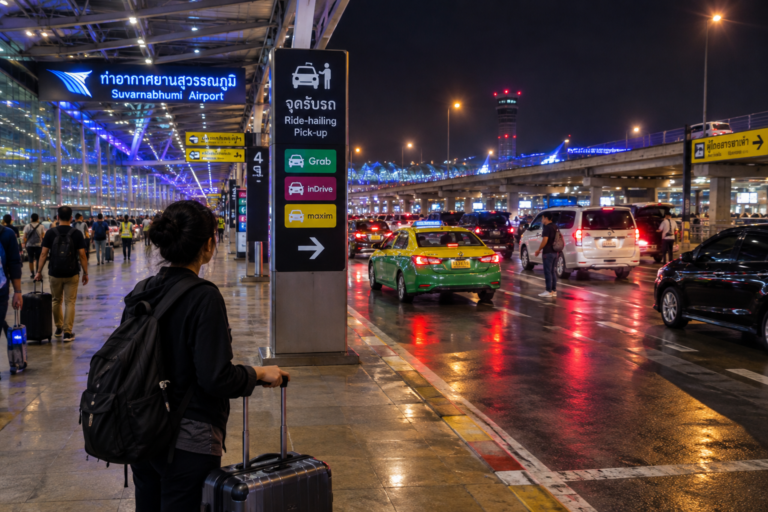
Getting from a Thai airport to your hotel sounds simple until you land late, face a language barrier, or discover that app prices and driver availability can change fast. For many travelers, the real question is not just which option is cheapest, but which one is most dependable when timing, comfort, and peace of mind matter.
In Thailand, three common choices stand out for airport transport: Bolt, Grab, and private airport transfer services. Each can work well, but they perform differently depending on the airport, time of day, city, luggage needs, and your tolerance for uncertainty. If you are trying to decide which option is most reliable, the answer depends on the kind of trip you are taking and what reliability means to you.
What reliability really means for airport transport in Thailand
Before comparing services, it helps to define reliability in practical travel terms. For airport pickups, reliability usually includes several factors:
- Availability: Can you get a ride quickly when you land?
- Predictability: Do you know what the car, driver, and pickup process will be like?
- Price stability: Is the quoted fare close to what you will actually pay?
- Communication: Can you easily contact the driver and understand pickup instructions?
- Safety and accountability: Is there a clear booking record and support process if something goes wrong?
- Suitability for airport travel: Can the service handle luggage, delayed flights, and specific pickup locations?
Many travelers focus first on price, but airport transportation is one of those situations where the cheapest choice is not always the most reliable. A low fare loses its appeal if you spend 40 minutes trying to find the driver, if the ride gets canceled after you exit the terminal, or if the car is too small for your bags.
Thailand has a well developed tourism infrastructure, but airport pickups can still be tricky. Large airports such as Suvarnabhumi in Bangkok are busy and spread out. Regional airports such as Phuket, Chiang Mai, and Krabi can have surge periods tied to flight arrivals. During peak travel seasons, weather disruptions, and late night arrival windows, the differences between Bolt, Grab, and private transfers become more noticeable.
How Bolt works for airport pickups in Thailand
Bolt is popular in Thailand because it often offers lower fares than competing ride hailing platforms. Budget conscious travelers frequently check Bolt first, especially for trips within Bangkok, Pattaya, Chiang Mai, and other urban areas where driver supply can be decent.
Where Bolt performs well
Bolt can work well when all of the following are true:
- You are arriving during regular daytime or evening hours
- You have mobile data working immediately after landing
- You are traveling light
- You are comfortable using app based pickup instructions
- You are not under tight time pressure
In these situations, Bolt may offer a very attractive balance of price and convenience. In some cities, you may find a car quickly and save a meaningful amount compared with other options.
Where Bolt can be less reliable
For airport use, Bolt's biggest weakness is not necessarily the ride itself. It is the uncertainty around pickup logistics and driver availability. This can show up in several ways:
- Longer wait times during peak arrival periods
- Drivers calling to confirm destination or negotiate pickup details
- Cancellations if the driver finds the airport pickup inconvenient
- Confusion about the exact meeting point
- Mismatch between luggage needs and vehicle size
These problems are not unique to Bolt, but they can be more noticeable on lower cost ride hailing platforms because drivers may be more selective about which trips they actually want to complete. Airports can involve parking fees, traffic queues, and terminal access rules. If drivers believe the job is less profitable or more complicated than a regular city pickup, some may hesitate.
This does not mean Bolt is unreliable everywhere in Thailand. It means Bolt is often conditionally reliable. When conditions are favorable, it can be excellent. When conditions are not favorable, it can become unpredictable faster than a prebooked transfer.
Bolt for late night and early morning arrivals
If you land after midnight or very early in the morning, Bolt becomes more of a gamble. In major cities, you may still find drivers, but supply can thin out. If your hotel is far from the airport or not in a direction drivers prefer, the odds of cancellation can increase. This matters most for tired arrivals, families with children, and first time visitors who do not want to troubleshoot transport after a long flight.
Bolt for tourists without a local SIM
Ride hailing reliability depends heavily on communication. If you do not have mobile data or a working local number, even a confirmed ride can become difficult. Airport Wi Fi may not be stable enough for ongoing driver coordination. If the driver cannot find you and cannot reach you, the ride may be canceled. This is one of the most overlooked reasons app based airport pickups feel unreliable to tourists.
How Grab compares for airport rides
Grab is one of the best known ride hailing apps in Southeast Asia and has broad recognition among both locals and travelers. In Thailand, Grab often feels more established from a user experience standpoint, especially for visitors who want a smoother app process and more consistent airport pickup routines.
Grab's strengths in reliability
Compared with Bolt, Grab often performs better in the areas that matter most for airport pickups:
- More familiar airport pickup workflows
- Stronger driver network in many tourist areas
- Better app clarity for users new to Thailand
- More predictable support and booking records
- Additional service tiers and vehicle choices
At major airports, Grab may have clearer pickup zones or better known meeting arrangements. Even when the fare is higher than Bolt, some travelers accept the difference because they want fewer variables after landing.
Grab's main tradeoff: price
The most common complaint about Grab is simple: it can cost more. During busy periods, the difference between Grab and Bolt may be enough to make budget travelers hesitate. However, if your goal is reliability rather than lowest cost, Grab often justifies the premium.
That premium can buy more than a ride. It can buy a lower chance of cancellation, a smoother pickup process, and less stress if your hotel is far away or your arrival is at an awkward hour.
When Grab is the better app based option
Grab is often the better choice if:
- You are arriving at a busy airport for the first time
- You have moderate to heavy luggage
- You are traveling with family or elderly passengers
- You are willing to pay somewhat more for a smoother experience
- You need a better chance of securing a ride quickly
For many tourists, Grab sits in the middle of the reliability spectrum. It is usually more dependable than Bolt for airport pickups, but not as controlled and predictable as a private transfer.
Why private airport transfer services are often the most reliable choice
Private airport transfers are different from ride hailing because they are usually booked in advance for a fixed route, fixed time window, and known passenger count. In Thailand, these services are commonly used for airport to hotel transfers in Bangkok, Phuket, Pattaya, Hua Hin, Chiang Mai, Koh Samui, and other high traffic destinations.
What makes private transfers more dependable
A private transfer is usually the most reliable option because the service is built specifically around airport travel. That means:
- Your ride is scheduled before you land
- The provider tracks your arrival details or at least plans around them
- The vehicle type is selected based on passenger and luggage needs
- The pickup instructions are usually provided in advance
- The driver or representative may meet you in a designated area
- The price is often fixed in advance
This setup removes many of the variables that make ride hailing stressful at airports. You do not need to compete with other arriving passengers for available drivers. You do not need to wonder whether someone will cancel. You do not need to stand in a crowded pickup area refreshing an app.
Best use cases for private transfer
Private transfers are especially strong for:
- Late night arrivals
- Early morning departures
- Families with children
- Groups with multiple suitcases
- Travelers heading to beach resorts or less central hotels
- Business travelers on a schedule
- First time visitors to Thailand
If your trip includes a long haul flight, jet lag, or an important next step such as a ferry connection, conference check in, or wedding event, private transfer reliability can be worth far more than the extra cost.
The downside of private transfers
The drawback is usually price. Private transfers often cost more than Bolt and can cost more than Grab, especially for solo travelers going short distances. There is also a quality range among providers, so choosing a reputable company matters. Not every operator offers the same standard of communication, vehicle condition, or customer support.
Still, when comparing pure reliability, private transfer usually ranks first because the service is designed around certainty rather than on demand matching.
Comparing Bolt, Grab, and private transfer by real airport scenarios
Scenario 1: Solo traveler landing in Bangkok during the afternoon
If you are a solo traveler arriving at Suvarnabhumi or Don Mueang during a normal daytime window, both Bolt and Grab can work well. Bolt may save money, while Grab may offer a smoother pickup. A private transfer is still reliable, but may not be necessary unless you strongly value convenience.
Most reliable: Private transfer
Best value with decent reliability: Grab
Cheapest if conditions are good: Bolt
Scenario 2: Family arriving in Phuket with four large suitcases
This is where private transfer clearly stands out. Vehicle size matters, luggage matters, and airport confusion matters. A prebooked van or larger car removes uncertainty. Grab may be a second choice if a suitable vehicle is available. Bolt is riskier because the cheapest category may not fit everyone and all bags comfortably.
Most reliable: Private transfer
Backup option: Grab
Least predictable: Bolt
Scenario 3: Late night arrival in Chiang Mai
At night, driver supply can be thinner. If you are staying in the city center, Grab may still work well, while Bolt may be hit or miss. If your hotel is a boutique property in a quieter area or you simply want a guaranteed ride after midnight, private transfer is the safest option.
Most reliable: Private transfer
Most practical app option: Grab
Scenario 4: Budget backpacker with one small bag
If keeping costs low is your top priority and you are flexible, Bolt can be a very reasonable choice. If you are comfortable waiting, messaging the driver, and adjusting to minor inconvenience, Bolt may be good enough. Reliability matters less when the stakes are low and you can absorb delays.
Best budget choice: Bolt
More dependable for slightly more money: Grab
Scenario 5: Important business trip with no room for delay
If you need to reach a meeting, event, or transfer point on time, private transfer is the strongest choice. Reliability here means reducing uncertainty to the lowest possible level. Even if Grab has a good track record, it is still an on demand service subject to supply conditions.
Most reliable: Private transfer by a wide margin
Airport specific factors that affect reliability in Thailand
Not all Thai airports behave the same. Reliability depends partly on airport layout, traffic control, and local demand patterns.
Bangkok airports
Suvarnabhumi is large, busy, and sometimes overwhelming for new arrivals. Pickup points can require careful attention. Don Mueang is smaller but still busy. In Bangkok, both Bolt and Grab are widely used, but private transfer remains the easiest option if you want a no stress arrival.
Phuket International Airport
Phuket often has strong demand tied to resort arrivals. Traffic and distance to hotels can vary greatly. If you are heading to Patong, Kata, Karon, Kamala, or a more remote resort area, private transfer reliability becomes more valuable. Grab can work well, but availability and pricing can shift quickly during peak periods.
Chiang Mai International Airport
Because many hotels are relatively close to the airport, app based rides can be quite practical here. Grab is often a safe middle ground. Bolt may be fine for light travelers. Private transfer is still useful for upscale resorts, groups, or late arrivals.
Krabi and Samui
These destinations often involve resort transfers, longer rides, or onward connections. In these cases, private transfer usually has the clearest reliability advantage because the destination may be less straightforward than a city hotel near an airport.
Cost versus reliability: what travelers often get wrong
A common mistake is comparing only the app price shown on screen. True transport value includes your time, stress level, and risk of disruption. A cheaper ride that takes 30 extra minutes to secure may not actually be the better deal, especially after a long flight.
Think about the hidden costs of a less reliable option:
- Extra roaming or SIM setup time
- Long waits in heat or rain
- Confusion with pickup zones
- Needing to rebook after cancellation
- Paying for a larger car after first booking the wrong category
- Missing a reservation or scheduled event
For airport journeys, reliability has economic value. That is why many experienced travelers choose differently for airport pickups than they do for normal city rides.
Safety, regulation, and passenger confidence
Reliability is closely tied to safety and operational structure. Thailand's transportation environment continues to evolve, and airport procedures can change over time. Travelers benefit from using services with clear booking records, driver identification, and traceable trip details.
It is wise to review general travel safety guidance before arrival, especially if you are landing late or carrying valuables. For broader context on road risk, the road traffic injuries fact sheet highlights why choosing organized and traceable transport can matter in unfamiliar destinations.
In practice, all three options can be safe when used properly, but private transfers and established ride hailing bookings tend to inspire more confidence than improvised transport decisions made while tired at the terminal.
How to make Bolt more reliable if you choose it
If you prefer Bolt because of cost, there are ways to improve your odds of a smooth airport pickup:
- Get a local SIM or eSIM before arrival so you have stable data
- Check the exact pickup point before requesting the ride
- Choose a larger vehicle if you have more than one suitcase
- Message the driver immediately with your terminal or exit details
- Avoid booking at the exact peak of a large arrival wave if possible
- Have Grab installed as a backup
- Keep some cash available in case payment method issues arise
These steps do not make Bolt as reliable as a private transfer, but they can narrow the gap significantly.
How to choose the right option for your trip style
Choose Bolt if
- Your budget matters more than certainty
- You travel light
- You are comfortable with app based coordination
- You have time flexibility
- You are in a city where driver supply is usually decent
Choose Grab if
- You want a good balance of convenience and reliability
- You are willing to pay somewhat more than Bolt
- You want a more established airport ride hailing experience
- You need a better chance of quick driver matching
Choose private airport transfer if
- You want the highest reliability
- You are arriving late or departing early
- You have a group, family, or lots of luggage
- You are going to a resort or less central location
- You do not want uncertainty after landing
So which is more reliable in Thailand?
If the question is strictly about reliability, private airport transfer is usually the winner in Thailand. It offers the most predictable pickup process, the fewest moving parts, and the lowest chance of last minute disruption. For travelers who value certainty above all else, especially after a long flight, it is the strongest option.
Grab usually comes second. It tends to be more dependable than Bolt for airport pickups, while Bolt can be the cheapest when conditions are favorable. Ultimately, the best choice depends on your priorities for reliability, cost, and convenience.